
Build stronger operations. Create better business results.
I help organizations simplify work, improve performance, strengthen employee engagement, and build operating practices that support sustainable growth.
OPERATIONAL IMPROVEMENT
Strong operations connect clear priorities, effective processes, capable people, useful technology, and meaningful accountability.


THE OPERATIONAL CHALLENGE
Operational problems rarely come from one process alone.
Missed goals, inconsistent service, unnecessary costs, and employee frustration are often symptoms of deeper issues. Work may be organized around outdated processes, unclear ownership, disconnected systems, or expectations that have never been fully defined.


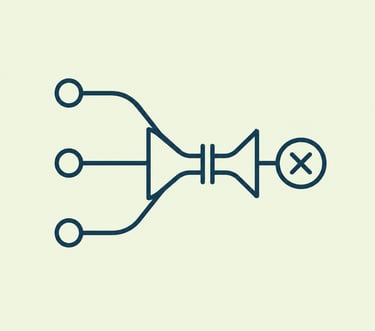



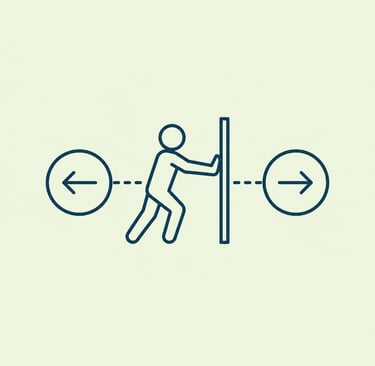
Unclear ownership
Inefficient workflows
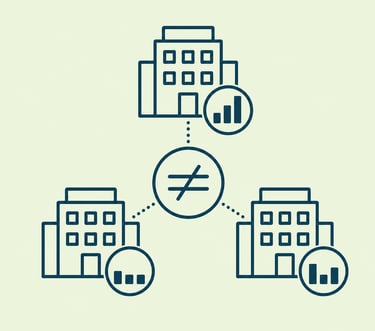
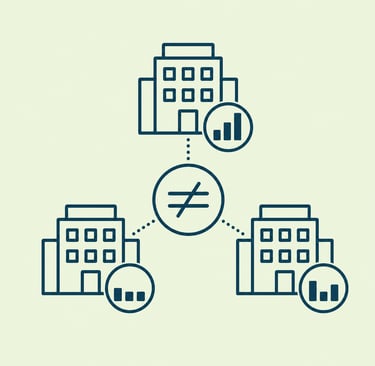
Inconsistent performance
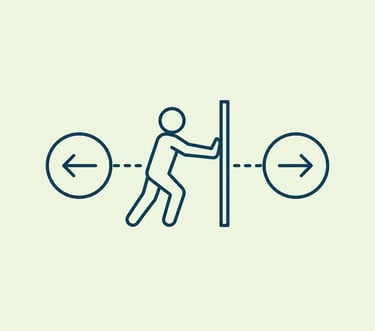
Change without adoption
Metrics without meaning
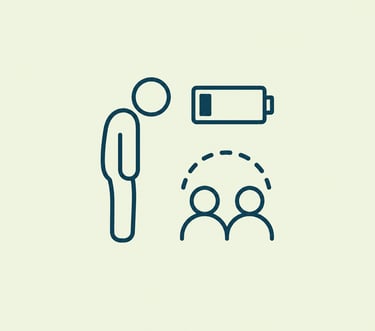
Low employee engagement
Work slows down when responsibilities, decision rights, and handoffs are not clearly defined.
Repeated steps, unnecessary approvals, and poorly designed processes create delay, waste, and frustration.
Results vary when teams lack common expectations, practical standards, and dependable operating routines.
Data provides little value when leaders cannot connect it to business priorities, employee behavior, and clear action.
Employees become frustrated when processes make work harder, expectations are unclear, or improvement efforts overlook their experience.
New systems and processes fall short when communication, training, leadership support, and follow-through are missing.
Sustainable improvement requires understanding how people, processes, tools, leadership, and measurement work together.
Operational improvement connects strategy to everyday execution.
Operational improvement is the work of making it easier for an organization to deliver consistent results. It examines how work moves, where decisions are made, what employees need, and how performance is measured.
Process and Workflow Improvement
Identify unnecessary steps, bottlenecks, delays, and handoff issues that make work harder or less effective.
Operational Roles and Ownership
Clarify responsibilities, decision rights, expectations, and accountability across teams and functions.
Performance Measurement
Develop meaningful metrics, reporting, and operating routines that help leaders understand performance and act.
Employee Engagement and Readiness
Improve the employee experience by addressing unclear expectations, process frustration, communication gaps, and barriers to performance.
Technology and Tool Effectiveness
Evaluate whether systems and tools support the work, reduce effort, provide useful information, and improve execution.
Change and Implementation
Help teams understand, adopt, and sustain new processes, systems, expectations, and operating practices.
A PRACTICAL APPROACH
The work may include process design, workflow improvement, role clarity, performance measurement, employee feedback, technology, communication, leadership routines, and change adoption.
The goal is not simply to make work faster. The goal is to create operating practices that are clearer, more effective, and better aligned with business priorities.
WHAT I HELP ORGANIZATIONS IMPROVE
Focused support across people, process and performance.







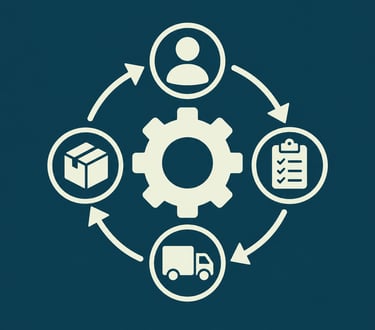
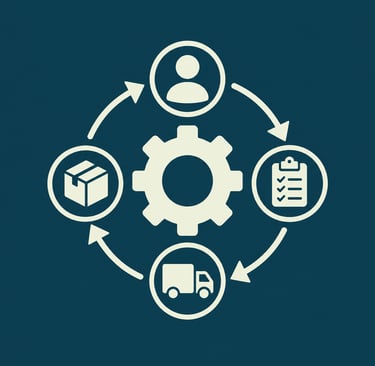
Less friction
Clearer ownership
Strong follow-through
Simpler processes and fewer barriers to getting work done.
Teams understand responsibilities, handoffs, and decision rights.
Priorities turn into action, accountability, and measurable improvement.
OPERATIONS WORK THROUGH PEOPLE
Better processes support better employee performance.
Operational improvement is often treated as a process exercise. However, every process depends on people understanding what is expected, having the tools to complete the work, and believing that the process helps rather than hinders performance.
Employee engagement and operational effectiveness are closely connected. Confusing workflows, repeated rework, limited information, and unclear priorities can reduce confidence, motivation, and accountability.

Clear expectations
Effective execution
Stronger business outcomes
When employees can see how their work contributes, understand what good performance looks like, and operate within practical systems, improvement is more likely to last.
HOW I WORK
Understand the work.
Improve the system.
Sustain the result.








Listen
Diagnose
Design
Activate
Understand business priorities, employee realities, customer needs, performance concerns, and current operating pressures.
Identify the underlying causes of delay, inconsistency, low engagement, repeat work, poor communication, or missed results.
Develop practical improvements across workflows, roles, tools, measurement, communication, and leadership practices.
Support implementation, employee readiness, accountability, adoption, and ongoing performance review.
WAYS TO ENGAGE
Flexible support based on your operational priorities.
Engagements can address a specific operational problem or support a broader improvement effort across the organization.







Operational Effectiveness Assessment
Process and Workflow Review
Performance Measurement and Scorecards
Operational Leadership Advisory
Employee Experience and Engagement Review
Change and Implementation Support
A focused review of workflows, roles, metrics, tools, employee concerns, and the barriers affecting performance.
An examination of how work moves across teams, where delays occur, and which steps can be simplified or improved.
Development of practical metrics, reporting, scorecards, and leadership routines that connect performance to action.
A review of the employee conditions affecting productivity, communication, confidence, accountability, and retention.
Guidance for communication, training, leadership alignment, employee readiness, adoption, and sustained execution.
Ongoing support for leaders responsible for operations, service delivery, performance improvement, or organizational change.
PERFORMANCE AND INSIGHT
Turn operating data into clearer decisions.
Operational metrics are most useful when leaders understand what they reveal, what may be driving the result, and what action should follow.
I help organizations select practical measures, connect performance data to employee and customer realities, and create routines that support accountability and continuous improvement.
BUILT ON REAL OPERATING EXPERIENCE
Operational leadership grounded in real business conditions.
My approach is shaped by more than 25 years of leadership across customer care, service operations, employee experience, remote work, performance improvement, and organizational change.

25+
Years of opertaional and customer-focused leadership experience


4000+
Employees supported through leadership and operating strategy


Fortune
50
Executive Leadership Experience


Current Operator
Active operational and customer experience leadership
At Comcast/NBCUniversal, I led support excellence strategies across large, complex operations. The work included process improvement, employee readiness, performance management, remote operations, service consistency, and large-scale change.
At Smartaira, I continue to lead customer experience and service operations in a growing organization. That work includes process design, vendor management, performance improvement, technology decisions, team development, and operating-model change.
EMPLOYEE PERSPECTIVE
The people doing the work often see the friction first.
Employees regularly encounter process breakdowns, unnecessary steps, unclear priorities, and technology limitations before those issues become visible in business results.
Employee listening can help leaders identify where work is more difficult than it should be and where operational improvement may have the greatest impact.
Feedback should not end with a survey. The value comes from connecting what employees experience to specific processes, decisions, and improvement priorities.
This experience allows me to approach operational improvement from the perspective of someone responsible for delivering the result, not only recommending it.
EXAMPLES OF THE WORK
SUPPORTING CAPABILITIES
WHO I WORK WITH
Practical improvement across people, process, and performance.
Workflow and Process Improvement
Simplify work, reduce unnecessary steps, improve handoffs, and strengthen ownership.
Performance Management
Develop scorecards, coaching routines, measurements, and leadership practices that support better execution.
Employee Readiness and Engagement
Address the communication, clarity, tools, and leadership support employees need to perform effectively.
Operational Change
Help teams adopt new systems, workflows, expectations, and operating models with less disruption.
Tools and methods that support the work.
Process mapping
Workflow analysis
Root-cause analysis
Role and ownership clarification
Performance metric design
Operational scorecards
Employee listening
Change-readiness assessment
Communication planning
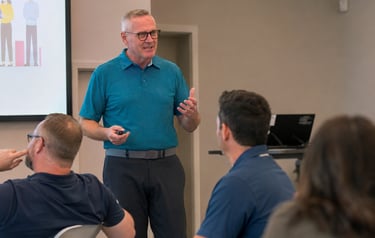
Leadership workshops
Technology and tool review
Implementation planning
Operating-rhythm design
Continuous-improvement planning
Designed for leaders responsible for operations, performance, and change.
This work may be a strong fit for:
Operations executives
Customer service and contact center leaders
Customer experience leaders
Human resources and employee experience leaders
Growing organizations building scalable processes
Organizations experiencing inconsistent performance
Teams implementing new systems or workflows
Leaders with data but unclear improvement priorities
Organizations seeking stronger employee engagement and productivity
Teams facing high effort, repeat work, or unclear ownership
Let's identify what is limiting performance.
Schedule a conversation to discuss your operational priorities, employee challenges, and opportunities for meaningful improvement.
READY TO IMPROVE THE WAY WORK GETS DONE?
Elevating Everyone
Stay Connected
doug.ward@elevatingeveryone.com
843-259-2055
© 2026. All rights reserved.
Elevate Everywhere Enterprises, LLC.