
Customer Service Cost Impact Calculator
Quickly estimate how customer service issues may affect churn, repeat contacts, escalations, recovery costs, and overall business performance.
This free calculator gives leaders a practical way to think through the hidden cost of poor customer service, including avoidable contacts, unresolved issues, service recovery, customer loss, and operational strain.

FREE TOOL
For CX leaders, service leaders, operations leaders,and business owners
4 to 6 minutes to complete
Instant results. No email required






What you'll learn.


Estimate service impact
See how recurring service issues may create avoidable costs through repeat contacts, escalations, churn, and recovery effort.


Spot cost drivers
Notice where customer service friction may be creating unnecessary workload, lost revenue, or operational pressure.


Choose the next step
Use your result to identify one practical improvement that could reduce service cost and improve customer experience.
Who this tool is for.
This tool is designed for leaders and teams that want a quick, practical way to estimate the business impact of customer service friction.
Teams experiencing repeat contacts, customer complaints, escalations, service recovery costs, churn concerns, or growing support demand
If you lead or support customer-facing work, customer service cost matters. Service issues rarely stay contained inside one interaction. They can increase workload, slow teams down, create repeat demand, damage trust, and affect customer retention.
This quick calculator helps you understand where service friction may be creating business cost and where a focused improvement could create measurable value.
Customer experience leaders
Customer service and support leaders
Operations leaders
Business owners and leadership teams
Contact center and service managers
Finance teams supporting CX








How to use your results.
After completing the calculator, review your result and look for the area that may be creating the greatest avoidable cost.
You do not need to fix everything at once. Start with one practical improvement.
The goal is to turn cost awareness into better action.
If the result confirms something you already suspected, use it as a starting point for a leadership or service team conversation. If the result surprises you, ask a few follow-up questions. Where are customers contacting us repeatedly? Which issues create the most escalations? What service problems are costing us time, trust, or revenue?
Small service improvements can create meaningful progress when they are specific, measurable, and connected to the real causes of customer friction.
Reviewing repeat contact drivers
Clarifying ownership for recurring issues
Reducing unnecessary escalations
Improving frontline tools or training
Updating customer communication
Simplifying one confusing process
Creating a feedback review routine
Choosing one service cost priority








Why customer service cost matters.
Poor customer service has a cost even when it does not show up as a single line item.
A customer calls again because the first issue was not resolved. A frontline employee spends extra time explaining a confusing process. A manager gets pulled into an escalation. A credit or refund is issued to recover the relationship. A frustrated customer leaves quietly.
Each of those moments creates cost.
Some costs are easy to see, such as credits, refunds, overtime, staffing needs, or lost customers. Others are harder to measure, such as reduced trust, employee frustration, repeated work, or the time leaders spend reacting to preventable issues.
Customer service cost is often connected to internal friction.
Unclear processes create inconsistent answers. Poor handoffs create delays. Limited training creates low confidence. Weak feedback routines allow the same issues to repeat. Leaders may see rising contact volume without seeing the root cause behind the demand.
When organizations understand the cost of service friction, they can make better decisions about where to improve.
Reducing customer service cost does not mean cutting support. It means improving the conditions that create unnecessary demand, repeat work, customer frustration, and avoidable recovery effort.
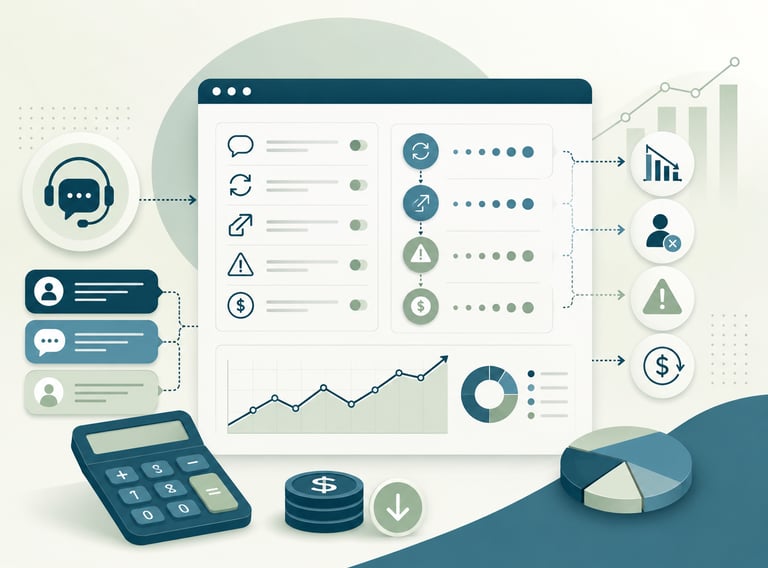
The Customer Service Cost Impact Calculator looks at several practical areas that influence the cost of service issues.
What the calculator estimates.
Repeat contacts
How much additional workload may be created when customers have to reach out more than once?
Escalations
How often do unresolved or difficult issues require manager, specialist, or leadership involvement?
Service recovery
What costs may be created by credits, refunds, concessions, or extra effort needed to restore customer trust?
Customer churn
How much revenue may be at risk when service issues cause customers to leave or disengage?
Frontline workload
How much employee time may be spent handling preventable contacts or recurring issues?
Operational strain
Where might service issues create pressure across staffing, processes, leadership attention, and internal coordination?
Improvement opportunity
Where could better processes, clearer communication, or stronger employee support reduce avoidable cost?
When to use this tool.
The Customer Service Cost Impact Calculator can be useful when:
Customer complaints are increasing
Repeat contacts are creating extra workload
Escalations are taking too much leadership time
Service recovery costs are becoming more visible
Customer churn or retention is a concern
Support demand feels higher than expected
Leaders want to connect service issues to business impact
A service team is preparing for process improvement work
An organization wants a practical way to estimate the cost of customer friction
This tool can also be used before a customer experience workshop, service improvement discussion, operational review, or contact center planning conversation.
Related support from Elevating Everyone.
If your results point to a broader customer service or operational challenge, Elevating Everyone can help your team turn insight into action.
Support may include customer experience strategy, operational improvement, service process review, employee listening, leadership sessions, facilitated conversations, action planning, and follow-up support.
The work is practical and focused on how customer feedback, service processes, employee readiness, leadership routines, and operational clarity work together to reduce friction and improve performance.
Helpful related pages:
Frequently Asked Questions
Is the Customer Service Cost Impact Calculator free?
Yes. The Customer Service Cost Impact Calculator is free to use. You do not need to provide an email address to see your result.
How long does it take?
Most people can complete the calculator in about 4 to 6 minutes.
Who should use it?
The calculator is useful for customer experience leaders, service leaders, operations leaders, business owners, and anyone responsible for improving service performance.
Can a leadership team use it?
Yes. A leader can use it individually, or multiple leaders can complete it and compare assumptions. If several people use it, focus on patterns instead of one exact number.
What should I do after seeing the result?
Choose one service improvement to focus on first. Look for the area where better process clarity, stronger employee support, reduced repeat contacts, or fewer escalations could create the most value.
Want help turning insight into action?
If your results point to bigger customer service, operations, leadership, or customer experience challenges, Elevating Everyone can help you build practical solutions that fit the way your organization actually works.
Elevating Everyone
Stay Connected
doug.ward@elevatingeveryone.com
843-259-2055
© 2026. All rights reserved.
Elevate Everywhere Enterprises, LLC.